Witness, Document, or Repost: Three Routes a Claim Can Take
Learn how witness accounts, documents, and reposts support different claims, so you can trace what a story establishes and spot repetition mistaken for corroboration.
A neighbor posts that a water main broke, and the same sentence soon appears in a community group and a local news feed. The repetition can make the claim feel settled, but the posts may all lead back to one person. To judge what has been established, trace the claim to its source: a witness, a document, or another account repeating it.
What does a source actually establish?
A source is the origin or basis offered for a claim. It is not simply the place where you encountered the claim. A news story may be the source of the wording on your screen while relying on a witness, a public record, or an earlier report for its evidence.
Each route supports different kinds of conclusions. A witness can describe what they perceived. A document can record what an organization or person wrote, filed, or decided. A repost can show that a claim circulated. None automatically proves every detail attached to it.
Keep the wording of the claim close to what the source can support. “A witness heard a loud bang” differs from “an explosion occurred.” “A notice announced a closure” differs from “the building is unsafe.” The gap between evidence and interpretation is often where an account grows beyond its source.
What can a witness tell you?
A witness gives an account based on direct observation: seeing a vehicle turn, hearing an announcement, or watching a meeting end. That account can be valuable, especially when the event is unfolding and no record is available yet.
Observation has boundaries. A person may see an action without knowing its cause, hear words without catching their context, or remember a sequence imperfectly. Conditions such as distance, obstruction, noise, and divided attention can affect what they could perceive. These are limits to consider, not reasons to dismiss a witness outright.
Ask what the person personally saw or heard, when and where they were present, and which details they learned later from someone else. An account that clearly separates observation from inference is easier to assess. So is one that identifies what remains unknown.
Say you see a post claiming that a library closed because of a safety inspection. The poster may have watched staff lock the entrance, which supports that the building closed at that moment. Unless the poster also heard the explanation or saw a relevant notice, the stated reason needs a separate source.
What can a document show?
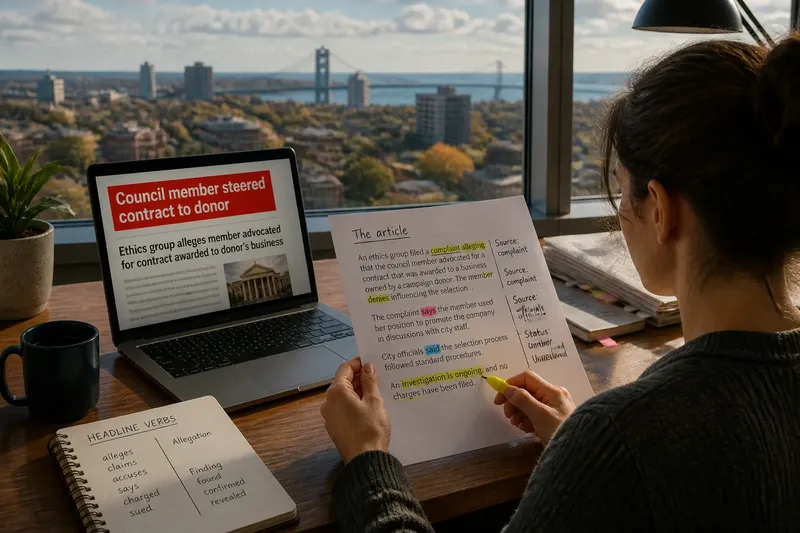
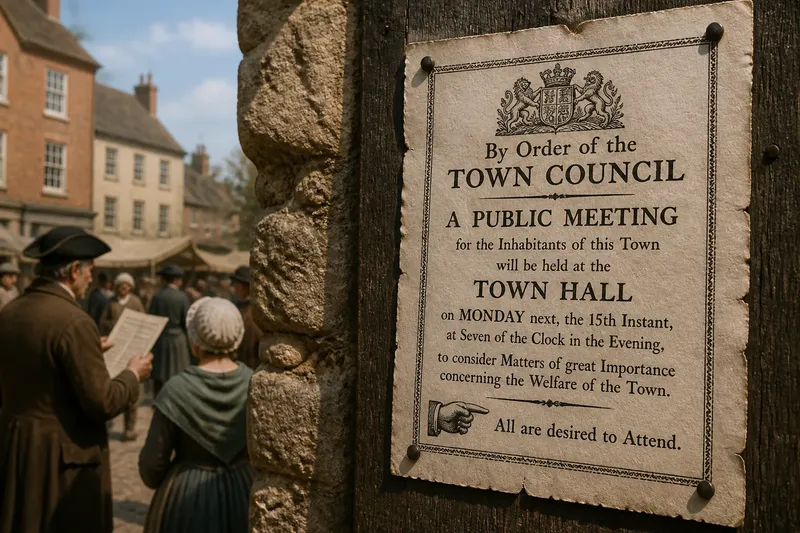
A document is a record with a creator and a purpose. It might be a meeting agenda, a signed notice, a court filing, an email, or a public agency report. It can establish that particular words or decisions were recorded, but its meaning depends on what kind of document it is and who produced it.
A draft is not the same as an approved policy. An allegation in a filing is not the same as a finding. A screenshot may preserve text while hiding the page it came from, its date, or the surrounding qualifications. If possible, follow a link to the original record and inspect its title, author or issuing body, date, and relevant surrounding text.
Documents also have silences. A schedule may show that a meeting was planned but not that it took place. A notice may state a decision without explaining every reason behind it. Treat the record as evidence of what it contains, not as a window into everything that happened.
A useful analogy is a receipt: it records a transaction, but it does not describe every conversation in the store. Likewise, a record can be precise about its subject and still leave a wider question unanswered.
Why is a repost not another source?
A repost carries a claim from one place to another. It can help you locate the original account or show that people are sharing the claim, but it does not add independent observation or documentation merely by repeating the same words.
To check whether accounts are independent, trace their links, wording, and attribution. Several posts may all cite one anonymous message. A news item and a social post may both rely on the same witness. Different outlets do not necessarily mean different evidence.
This is sometimes called source dependence: multiple accounts rely on a shared origin. If that origin is mistaken, repetition can spread the mistake while making the claim appear broadly confirmed. Look for evidence that comes from a genuinely separate route, such as a second witness who observed the event independently or a relevant record created by another party.
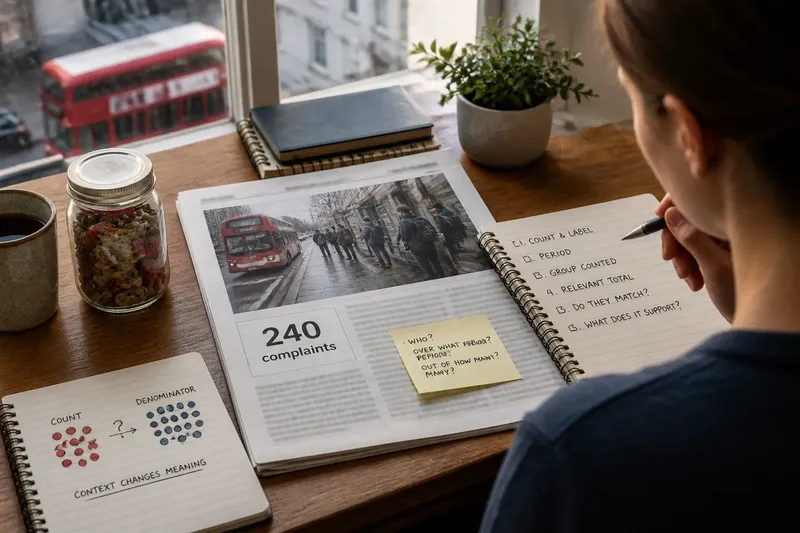
Even independent sources can agree only on part of a story. Two witnesses might confirm that a road was blocked, while neither knows why. Corroboration—the support one source gives another—should attach to a specific detail, not be treated as approval of every claim in a post.
How should you compare the three routes?
- Witness: Identify what was directly perceived and what was inferred or heard later.
- Document: Check who created the record, what it records, and what it does not address.
- Repost: Follow the attribution back to the earliest available source.
- Shared origin: Note when several accounts depend on the same person, message, or record.
- Claim wording: Narrow the conclusion to the detail the evidence actually supports.
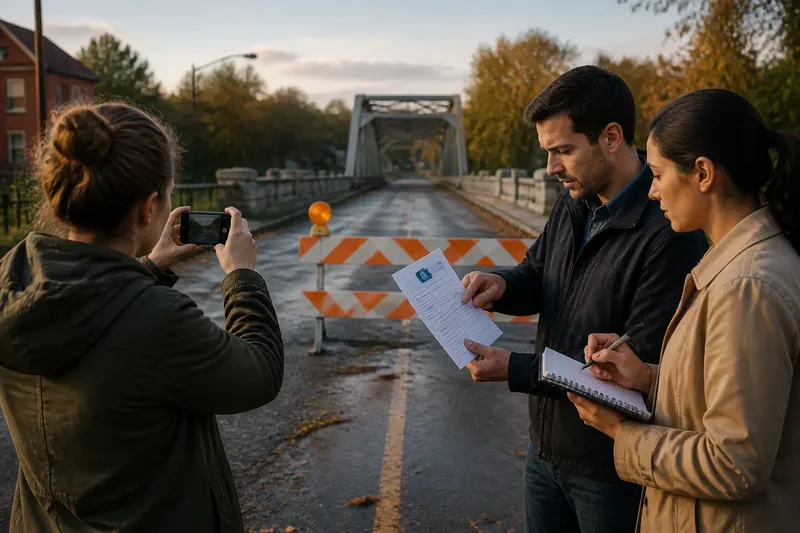
Imagine a neighborhood channel shares a photo of a road barrier and says a bridge has been closed after damage. A resident who photographed the barrier can support that it was present at the pictured place and time. A transport notice might confirm a closure and state its official reason. If several accounts merely repeat the channel’s claim, they add circulation, not independent confirmation. The careful wording would distinguish the visible barrier, the documented closure, and any cause not yet established.
Which questions help trace a claim?
What counts as a direct witness?
A direct witness reports personal perception of the event or detail at issue. If someone learned a detail afterward, that part is secondhand, even if the person also witnessed another part.
Can a document be wrong?
Yes. A document can contain an error, reflect a limited purpose, or record a claim that has not been verified. Its creator, context, and precise wording help show what it can support.
Do several reposts count as corroboration?
Not if they all trace back to the same source. Reposts can establish that a claim is circulating, but corroboration requires additional evidence that does not simply repeat the original account.
What if the original source is unavailable?
Say that the source could not be checked, and describe the claim as attributed rather than established. A missing link or deleted post does not by itself show that the claim is false.
How should uncertainty appear in your wording?
Use verbs that match the evidence: a witness “said” or “saw,” a record “states” or “lists,” and a repost “claims” or “repeats.” If independent evidence supports a detail, say which detail is corroborated. This keeps an account informative without turning a partial record into a complete explanation.
When you encounter a news claim, the useful question is not only “Who said this?” but “What route did this detail take to reach me?” For witness, document, or repost claims, that distinction reveals whether you have an observation, a record, a repeated assertion, or some combination—and what would still need support.